
10 Powerful Personal Branding Tips for Creators in 2026
Published on January 28, 2026 · Reading time: 20 min
In the crowded digital marketplace of 2026, creators, coaches, and community owners require more than just compelling content to succeed. They need a powerful personal brand. A well-defined brand is no longer a luxury; it is the fundamental framework for sustainable monetisation and audience loyalty. It's what separates a fleeting online presence from a recognised authority whose community people are willing to pay to access. A strong identity builds trust, fosters connection, and directly influences your bottom line.
This guide provides a comprehensive collection of actionable personal branding tips designed to elevate your influence. We move past the generic advice, focusing instead on practical strategies tailored for building and monetising a dedicated following. You will learn how to articulate your unique value, create a consistent visual and messaging identity, and cultivate an engaged audience that sees genuine value in your work.
Each tip is crafted to be a building block in your monetisation strategy, showing you not just how to build a brand, but how to convert that brand equity into a profitable, automated private community on platforms like WhatsApp or Discord. We will explore specific tactics to transform your influence into a thriving business, turning your name into your most valuable asset. Let's delve into the strategies that will give your brand the structure and authority it needs to stand out and generate predictable revenue.
1. Define Your Unique Value Proposition (UVP)
Before you design a logo or choose a colour palette, you must first articulate what makes you uniquely valuable. Your Unique Value Proposition (UVP) is the cornerstone of your personal brand; it’s the clear, concise statement that communicates your specific expertise, the audience you serve, and the distinct results you deliver. It answers the crucial question every potential follower, client, or community member asks: "Why should I choose you over everyone else?"
A powerful UVP is the difference between being a generic "business coach" and becoming "the go-to expert for first-time founders who want to secure pre-seed funding without giving up equity." The second one is specific, targeted, and promises a tangible outcome. This level of clarity is one of the most effective personal branding tips for attracting high-quality leads for your private group or coaching programme. It acts as a filter, drawing in your ideal audience while repelling those who aren't a good fit.
How to Craft Your UVP
To build a UVP that truly resonates, you need to look inward at your skills and outward at the market. A strong UVP sits at the intersection of what you do best and what your target audience needs most. This process is foundational to identifying profitable opportunities, a concept you can explore further by reading about how to find untapped niches in the market .
Follow these actionable steps to define your own:
- Conduct a Skills Audit: List everything you’re good at, including technical skills (like crypto analysis or content creation), soft skills (like communication or empathy), and unique experiences (like building a community from scratch).
- Analyse the Competition: Identify what other creators or coaches in your space are not emphasising. Is there a service gap? A unique perspective you can offer? This is where your unique angle lies.
- Interview Past Clients: Ask your best clients or community members what they valued most about working with you. Their answers often reveal the true, perceived value you provide.
- Synthesise and Refine: Combine these insights into a single, powerful sentence. A great formula is: "I help [Your Target Audience] achieve [Specific Outcome] by [Your Unique Method]." Test it, get feedback, and refine it until it feels authentic and compelling.
2. Build a Professional Online Presence
Your Unique Value Proposition sets the strategy, but your online presence is where that strategy comes to life. A professional online presence involves creating and maintaining a cohesive, polished, and consistent identity across all the digital platforms where your audience lives. This isn't just about having a profile; it's about curating a digital ecosystem that consistently communicates your expertise, reinforces your value, and builds trust with every click.
For a creator or coach, a fragmented online presence is a major credibility killer. If a potential client finds a slick website but an outdated, unprofessional LinkedIn profile, it creates doubt. A strong online brand, like that of author Brené Brown, uses a professional website as a central hub and an authentic social presence to foster community and share insights. This consistency makes your brand recognisable and trustworthy, which is a critical step in guiding followers toward your paid offerings.
How to Create a Cohesive Digital Footprint
Building a powerful online presence requires a strategic, multi-platform approach. It's about ensuring that every touchpoint, from your website's homepage to your social media bio, tells the same compelling story. This harmonisation is one of the most vital personal branding tips for converting casual followers into dedicated community members.
Follow these actionable steps to unify your online brand:
- Claim Your Name: Secure your name or a consistent handle across all relevant platforms (your website domain, LinkedIn, X, Instagram, etc.) as early as possible. This prevents confusion and ensures brand consistency.
- Standardise Your Core Assets: Use the same professional headshot, a consistent colour palette, and a unified bio across all profiles. Your bio should be a condensed version of your UVP, optimised with keywords relevant to your niche.
- Optimise Your “Digital Hub”: Your website or a Linktree-style page should be your central hub. Ensure it clearly states what you do, who you help, and includes a clear call-to-action, such as "Join My Private Community" or "Book a Discovery Call."
- Conduct Quarterly Audits: Set a reminder to review and update your online profiles every three months. Add recent accomplishments to your LinkedIn, update project portfolios, and ensure all links are working correctly. This keeps your brand looking current and active.
3. Create Valuable Content Consistently
Your personal brand doesn’t exist in a vacuum; it’s built and reinforced through the value you share with the world. Content creation is the engine of modern personal branding. By consistently producing relevant, high-quality material that educates, entertains, or inspires, you build trust and establish yourself as an authority. This is how you transform from a name into a go-to resource.
Consistent, valuable content is one of the most powerful personal branding tips because it demonstrates your expertise in real-time. Think of figures like Gary Vaynerchuk, who dominates multiple platforms with daily video content, or Ann Handley, whose weekly newsletter provides must-read writing insights. They don’t just claim to be experts; they prove it with every piece of content they release, building a loyal following that is primed to join a paid community or purchase a coaching programme.
How to Implement a Consistent Content Strategy
Effective content creation isn’t about posting erratically; it’s about building a sustainable system that serves your audience’s deepest needs. It’s the bridge between your UVP and your community, showing them how you deliver on your promise. This strategic approach turns passive followers into engaged community members.
Follow these actionable steps to build your content engine:
- Focus Your Formats: Don't try to master every platform at once. Choose one to two primary content formats you genuinely enjoy creating, such as long-form videos for YouTube, insightful threads for X (formerly Twitter), or a weekly email newsletter.
- Create a Content Calendar: Plan your topics and posts three to six months in advance. This eliminates the pressure of daily ideation and ensures your content remains aligned with your core brand message and audience needs.
- Prioritise Problem-Solving: Every piece of content should aim to solve a specific problem your audience faces. Whether it’s a tutorial on a new trading strategy or a guide to community monetization, make tangible value your top priority.
- Batch and Repurpose: Dedicate blocks of time to "batch" create content (e.g., film four videos in one day). Then, repurpose that core content into smaller assets like clips, quotes, and blog posts to distribute across multiple channels efficiently.
4. Master Storytelling and Authenticity
Facts and figures can inform, but stories are what truly connect and persuade. Effective personal branding isn't about presenting a flawless, polished résumé; it's about weaving your authentic journey, including the struggles and triumphs, into a compelling narrative. This approach builds the trust and emotional resonance that credentials alone cannot achieve, answering the question: "Why should I trust and follow you?"

A powerful story transforms you from a faceless expert into a relatable human being. Think of Oprah Winfrey, whose brand is built on empathy derived from her willingness to share her own traumatic past. This vulnerability doesn't detract from her authority; it amplifies it. For creators and coaches, this is one of the most vital personal branding tips because it creates a loyal community that feels genuinely connected to your mission, making them more likely to invest in your paid groups or programmes.
How to Weave Your Authentic Narrative
Authentic storytelling is a strategic skill that involves sharing the right parts of your journey to illustrate your expertise and values. It’s about being genuine, not about oversharing. The goal is to connect your personal experiences to universal themes that resonate with your target audience, showing them you understand their struggles because you've walked a similar path.
Follow these actionable steps to tell your story effectively:
- Identify Your Core Stories: Pinpoint 3-5 key moments or challenges in your life or career that shaped who you are today. These could be failures that taught crucial lessons, a significant pivot, or the "aha" moment that led you to your current mission.
- Show Transformation: Don't just share victories; detail the journey. A compelling narrative showcases a clear "before and after" arc, demonstrating your growth and the expertise you gained along the way. This is far more powerful than simply stating your qualifications.
- Connect Stories to Your UVP: Every story you tell should subtly reinforce your Unique Value Proposition. If you help crypto traders manage risk, share a personal story about a major loss you experienced and the system you developed to prevent it from happening again.
- Set Clear Boundaries: Authenticity does not require total transparency. Decide in advance which aspects of your life are private. Sharing strategically builds trust, while oversharing can dilute your professional message and create discomfort.
5. Network and Build Strategic Relationships
Your personal brand doesn't exist in a vacuum; it is amplified and validated through the people you connect with. Strategic networking is the process of intentionally building a web of mutually beneficial relationships with peers, mentors, and collaborators. It's less about collecting contacts and more about cultivating genuine connections that create opportunities and reinforce your authority.
The power of networking lies in association and collaboration. When a respected creator in your niche mentions you or you co-host a workshop, their audience's trust is transferred to you, accelerating your brand growth exponentially. Consider Tim Ferriss, whose brand was built on deep relationships with world-class performers. Each interview and collaboration not only provided value to his audience but also solidified his own status as an expert curator of excellence. This approach is one of the most vital personal branding tips for moving from a solo creator to a recognised industry leader.
How to Build Your Network Effectively
True networking is about giving more than you take. It's a long-term strategy that requires authenticity, consistency, and a genuine desire to help others succeed. By positioning yourself as a valuable and generous connector, you naturally attract high-calibre opportunities and relationships that elevate your personal brand.
Follow these actionable steps to build your network:
- Lead with Generosity: Focus on giving value first. Share a helpful resource, introduce two people who could benefit from knowing each other, or offer a genuine compliment on someone's work. This builds goodwill and makes you memorable.
- Engage Authentically Online: Don't just "like" posts. Leave thoughtful, insightful comments on the content of creators and leaders in your space. Participate actively and helpfully in niche online communities and forums.
- Attend Industry Events: Make an effort to attend relevant conferences, meetups, and workshops, both online and in person. Go with a plan to meet specific people but remain open to spontaneous connections.
- Follow Up with Intention: After meeting someone, send a personalised follow-up message that references your conversation. Suggest a virtual coffee chat to continue the discussion, not to pitch, but to learn more about them and their work.
6. Develop a Consistent Visual Brand Identity
While your UVP defines what you say, your visual brand identity determines how your audience feels when they encounter your content. Visual consistency across all your branding materials builds recognition, professionalism, and trust. A cohesive visual identity, including your colour palette, typography, and imagery style, makes your brand instantly recognisable and reinforces your core message at every touchpoint, from social media posts to your private community platform.
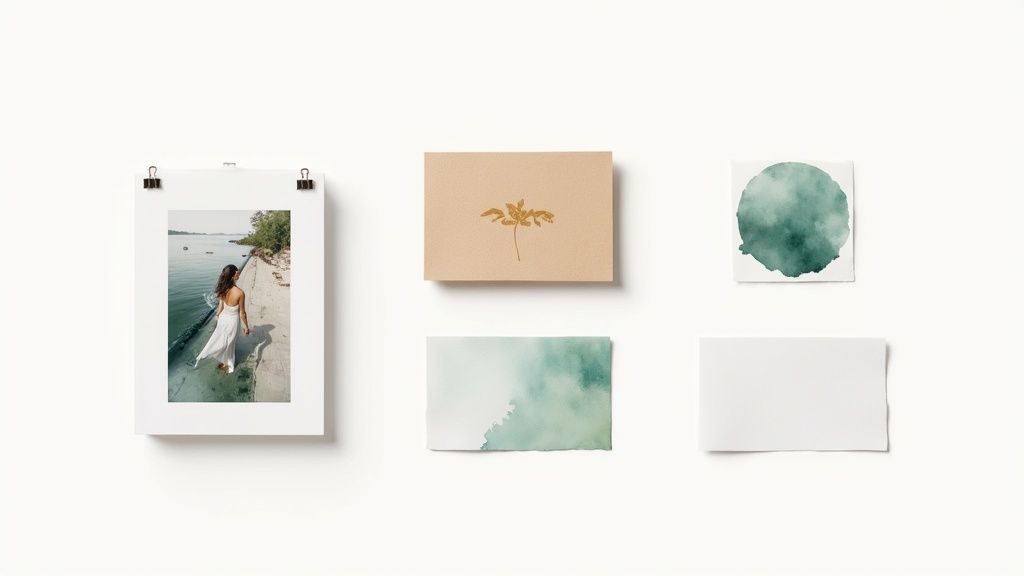
This is one of the most crucial personal branding tips for creators because it transforms your presence from a collection of random posts into a memorable, unified experience. Consider Marie Forleo's signature pink and gold palette, which communicates vibrancy and premium quality, or Tim Ferriss's minimalist aesthetic, which reflects his focus on efficiency and deconstruction. This visual shorthand tells your audience who you are before they even read a single word, making your brand more sticky and authoritative.
How to Create Your Visual Identity
A strong visual identity is not about having the flashiest design; it's about having a consistent one that aligns with your brand's personality and values. This system ensures that whether someone finds you on Instagram, your website, or within your paid group, the experience is seamless and reinforces who you are.
Follow these actionable steps to build your own:
- Create a Brand Style Guide: This is a central document outlining your visual rules. Include your logo variations, primary and secondary colour hex codes, and font choices. This guide is your single source of truth.
- Choose Your Typography: Select two to three complementary fonts. A common practice is to use one distinct font for headlines (a serif or display font) and a clean, readable font for body text (a sans-serif font). Stick to these across all platforms.
- Define Your Imagery Style: Decide on a consistent look for your photos and graphics. Will you use bright, vibrant photography, muted and moody tones, or custom illustrations? Use consistent filters or editing styles to maintain this look.
- Establish Layout Patterns: Use consistent spacing, alignment, and composition in your designs. Creating a set of templates for social media posts, thumbnails, and documents can save time and ensure visual harmony.
7. Establish Thought Leadership Through Expertise
Beyond just being knowledgeable, establishing thought leadership means becoming the go-to authority your audience, peers, and even the media turn to for guidance and original insights. It's about shaping the conversation in your niche, not just participating in it. This evolution from expert to thought leader is what solidifies your personal brand as a trusted, influential voice that people are willing to pay for access to, for example, within a private community.
Thought leadership is the difference between a "crypto analyst" who explains market movements and an analyst who develops a new framework for evaluating token utility that the entire industry adopts. This elevated status is a powerful magnet for high-value opportunities, from keynote speaking gigs to lucrative coaching contracts. It's one of the most powerful personal branding tips because it creates demand for your perspective, making your brand synonymous with innovation and authority.
How to Become a Thought Leader
Becoming a recognised thought leader requires a deliberate strategy of creating and sharing unique, high-value intellectual property. It’s about synthesising information in new ways and pushing your industry forward. This process builds immense trust and makes your brand a destination for serious learners.
Follow these actionable steps to build your authority:
- Develop Original Frameworks: Don’t just regurgitate existing advice. Create your own proprietary models, methodologies, or acronyms that simplify complex topics for your audience.
- Publish Data-Driven Insights: Conduct your own surveys, analyse market data, or compile unique case studies. Sharing original research immediately positions you as a primary source of information, not just a commentator.
- Share Contrarian Perspectives: Challenge a commonly held belief in your industry with a well-reasoned argument. A thoughtful, contrarian take can generate significant discussion and attention, establishing your brand as a critical thinker.
- Seek High-Profile Platforms: Contribute articles to respected industry publications, get interviewed on popular podcasts, or speak at conferences. Leveraging the credibility of established platforms gives your ideas a powerful endorsement and wider reach.
8. Leverage Social Proof and Testimonials
Your personal brand isn't just what you say about yourself; it's what others say about you. Social proof is the powerful psychological concept that people will adopt the actions of others in an attempt to reflect correct behaviour. In branding, it manifests as testimonials, case studies, and endorsements that validate your expertise and build trust with your audience. It transforms your claims from self-promotion into verified facts.
For a coach or community owner, social proof is non-negotiable. When a potential member sees that others have achieved tangible results from your programme, their perceived risk plummets and their desire to join skyrockets. A powerful testimonial isn't just a compliment; it's a compelling story of transformation that your ideal client wants for themselves. This is one of the most critical personal branding tips for converting followers into paying community members because it provides the external validation needed to make a purchasing decision.
How to Gather and Showcase Social Proof
The key to effective social proof is to be proactive in collecting it and strategic in displaying it. Don't wait for praise to fall into your lap. Instead, integrate the process of gathering feedback into your client or member journey. This ensures you always have a fresh supply of powerful stories to share.
Follow these actionable steps to leverage social proof effectively:
- Systematise Your Requests: Create a simple process for asking for testimonials at key moments, such as after a client achieves a significant milestone or at the end of a coaching programme. Use a simple form or automated email to make it easy for them.
- Focus on Measurable Results: Guide your clients to provide specific, result-oriented feedback. Instead of "She's a great coach," aim for "Working with her helped me increase my community engagement by 40% in just two months."
- Showcase Transformation Stories: Use a "before and after" format. Detail the problem a client faced before joining your group and the specific, positive outcome they experienced after. These narratives are incredibly persuasive.
- Display Prominently: Don't hide your best testimonials. Feature them on your website's homepage, your sales pages for private groups, and in your social media content. Use screenshots of positive comments from your community or DMs (with permission) for added authenticity.
9. Engage and Interact with Your Audience
A powerful personal brand isn’t a one-way broadcast; it's a dynamic conversation. Engaging with your audience is how you transform passive followers into a loyal, dedicated community. It’s the process of building meaningful relationships by actively listening, responding, and valuing their input. This interaction demonstrates that you are accessible, genuinely care about their challenges, and see them as more than just numbers on a screen.
True engagement is the difference between having an audience and building a community. Think of Gary Vaynerchuk, who famously built his brand by replying to countless comments and DMs, or Marie Forleo, who fosters connection through live Q&A sessions. These actions build immense trust and loyalty, turning followers into advocates who will champion your brand, join your paid groups, and buy your coaching programmes. This is one of the most critical personal branding tips for fostering long-term growth and monetisation.
How to Foster Meaningful Engagement
Authentic interaction requires a consistent and genuine effort. The goal is to make every follower feel seen and heard, creating a space where they are comfortable participating. This strategy is essential for building the know, like, and trust factor that precedes any transaction, from joining a free community to enrolling in a high-ticket mastermind.
Follow these actionable steps to boost your engagement:
- Schedule Daily Interaction Time: Dedicate 15-30 minutes each day specifically to responding to comments, DMs, and mentions. Consistency is more important than volume.
- Reply with Substance: Move beyond generic emojis or "thanks!" Ask follow-up questions, offer a thoughtful perspective, or tag another user who might add value. This encourages deeper conversation.
- Ask Open-Ended Questions: End your posts with questions that invite discussion. Instead of asking "Do you agree?", ask "What's one challenge you're facing with this right now?"
- Host Live Q&A Sessions: Use platforms like Instagram Live, YouTube, or Zoom to host monthly "office hours." This provides immense value and creates a direct, real-time connection.
- Feature Your Audience: Showcase user-generated content, share success stories from your community members, and give public shout-outs. This makes your audience feel valued and encourages them to engage more.
10. Stay Agile and Evolve Your Brand Strategically
A personal brand is not a static monument; it's a living entity that must adapt to survive and thrive. As you gain new skills, your audience's needs shift, and market trends change, your brand must evolve. Strategic evolution is the art of staying relevant and modern without abandoning the core identity that your community trusts. It answers the critical question every established creator faces: "How do I grow without losing who I am?"
Failing to evolve is one of the quickest ways to become obsolete. Think of Oprah Winfrey, who transitioned from a talk show host to a global media mogul and wellness advocate. Her evolution felt authentic because it was a natural progression of her interests and expertise. This is one of the most vital personal branding tips for long-term success. It allows you to introduce new offerings, like a high-ticket coaching programme or a specialised private group, that align with your expanded knowledge while feeling genuine to your followers.
How to Evolve Your Brand Authentically
A successful brand evolution is planned, not reactive. It requires a deep understanding of where you've been and a clear vision for where you're going. It's about building on your existing foundation, not demolishing it to chase a fleeting trend. The goal is to bring your audience along on your journey, making them feel like part of your growth.
Follow these actionable steps to guide your brand's evolution:
- Schedule an Annual Brand Audit: At least once a year, review your messaging, content, and offerings. Ask yourself: Does this still reflect my core expertise and future goals? Is it still resonating with my ideal community member?
- Communicate Your "Why" Transparently: When you introduce a new focus, explain the reason behind the shift. Share your personal growth story or the market insights that prompted the change. This builds trust and prevents your audience from feeling alienated.
- Test New Positioning Incrementally: Before a complete overhaul, test new topics or service ideas with your existing audience. Create content around a potential new niche and gauge the reaction. Use feedback to refine your direction before committing fully.
- Maintain a Connective Thread: Ensure your evolution has a clear link to your established expertise. If you're a crypto analyst moving into Web3 community building, frame it as the next logical step in leveraging decentralised technology for connection and profit.
10-Point Personal Branding Comparison
| Strategy | Implementation Complexity 🔄 | Resources Required ⚡ | Expected Outcomes ⭐ / 📊 | Ideal Use Cases 💡 | Key Advantages ⭐ |
|---|---|---|---|---|---|
| Define Your Unique Value Proposition (UVP) | 🔄 Moderate–High — introspection and iteration | ⚡ Low cost, high time commitment | ⭐ Strong differentiation; 📊 clearer positioning & targeting | 💡 Launching a brand, niche positioning, rebrand | ⭐ Memorable first impressions; guides branding |
| Build a Professional Online Presence | 🔄 Moderate — setup + ongoing maintenance | ⚡ Moderate — website, profiles, possible technical help | ⭐ Increased visibility & credibility; 📊 24/7 discoverability | 💡 Job seekers, freelancers, consultants | ⭐ Builds trust; supports SEO and inbound leads |
| Create Valuable Content Consistently | 🔄 High — ongoing content production cadence | ⚡ High — time, tools, editing/production costs | ⭐ Thought leadership; 📊 organic reach and audience growth over time | 💡 Audience building, lead generation, authority growth | ⭐ Long-term traffic, community loyalty |
| Master Storytelling and Authenticity | 🔄 Moderate — practice, boundary setting | ⚡ Low monetary, moderate emotional/time effort | ⭐ Deeper trust & engagement; 📊 stronger emotional connection | 💡 Brands needing relatability, personal brands | ⭐ Memorable, relatable messaging; distinguishes you |
| Network and Build Strategic Relationships | 🔄 Moderate — continuous outreach & follow-up | ⚡ Moderate — time, events, possible travel costs | ⭐ Expanded reach; 📊 referrals, partnerships, social proof | 💡 Scaling reach, partnerships, mentorship seeking | ⭐ Referral pipeline; access to opportunities & support |
| Develop a Consistent Visual Brand Identity | 🔄 Moderate — design system creation + rollout | ⚡ Moderate — design, photography, templates | ⭐ Increased recognition; 📊 improved professionalism & memorability | 💡 Consumer-facing brands, creatives, productized services | ⭐ Visual cohesion; reinforces perceived quality |
| Establish Thought Leadership Through Expertise | 🔄 High — long-term reputation building | ⚡ High — research, publishing, speaking resources | ⭐ Authority and influence; 📊 premium opportunities & media attention | 💡 Executives, consultants, academics, authors | ⭐ Commands premium fees; opens speaking/PR doors |
| Leverage Social Proof and Testimonials | 🔄 Low–Moderate — collect, curate, display | ⚡ Low — time to request and format proofs | ⭐ Faster trust building; 📊 higher conversion rates | 💡 Service providers, sales-driven offerings, case studies | ⭐ Persuasive validation; reduces buyer risk |
| Engage and Interact with Your Audience | 🔄 Moderate — ongoing, time-sensitive engagement | ⚡ Moderate — daily time, moderation tools | ⭐ Stronger loyalty; 📊 improved retention and reach | 💡 Community-driven brands, creators, product feedback loops | ⭐ Builds advocates; generates UGC and insights |
| Stay Agile and Evolve Your Brand Strategically | 🔄 Moderate — periodic audits and tests | ⚡ Moderate — time, occasional rebranding costs | ⭐ Sustained relevance; 📊 mitigates stagnation risk | 💡 Growth-stage brands, career pivots, market shifts | ⭐ Future-proofing; enables controlled growth and change |
From Brand to Business: Monetising Your Community Effortlessly
You've journeyed through the essential pillars of modern influence, from defining your unique value proposition to strategically evolving your presence. The ten personal branding tips we've explored are not just theoretical concepts; they are the architectural blueprints for building a powerful and authentic digital identity. You now possess the framework to craft a brand that resonates, builds trust, and attracts a loyal community.
The true power of these strategies is realised when they work in concert. A strong visual identity amplifies your consistent content. Your authentic storytelling makes your social proof more compelling. Strategic networking expands the reach of your thought leadership. Each tip is a gear in a larger machine, and when they turn together, they create unstoppable momentum. This momentum is what transforms an audience of casual followers into a thriving community that values your expertise.
The Bridge from Influence to Income
The ultimate objective for any creator, coach, or community owner is sustainability. Your brand is the foundation, but monetisation is the structure that allows it to stand long-term. Many creators falter at this critical juncture, believing that selling to their community compromises authenticity. This couldn't be further from the truth.
Monetisation, when done correctly, is the ultimate act of value exchange. You’ve invested countless hours building trust and providing free, valuable content. Offering a premium, private space isn’t just selling access; it’s providing a deeper, more concentrated form of the value your community already loves. It’s an invitation to a more exclusive, focused experience where members can get direct access to your insights, advanced strategies, or a more intimate community environment.
The key is to make this transition seamless and value-driven. Your community shouldn't feel like they are being sold to. Instead, they should feel like they are being offered a natural next step in their journey with you. This is where leveraging the right tools becomes paramount. You need a system that handles the logistics of payments and access management effortlessly, so you can remain focused on what you do best: delivering exceptional value.
Your Actionable Path Forward
Reflecting on these personal branding tips is a great start, but action is what separates the successful from the stagnant. To truly operationalise what you've learned and begin the journey from brand to business, here are your immediate next steps:
- Conduct a Brand Audit: Re-evaluate each of the ten points against your current brand. Where are the gaps? Is your messaging clear? Is your visual identity consistent across all platforms? Be honest and identify one or two key areas for immediate improvement.
- Map Your Premium Offering: What exclusive value can you provide in a private setting? This could be advanced crypto trading signals, in-depth coaching sessions, exclusive content drops, or direct Q&A access. Define what makes your paid community an undeniable upgrade from your public content.
- Automate the Transition: The final, crucial step is to build the bridge for your audience to cross. Your personal brand has done the hard work of building trust and desire. Now, you need an automated, professional system to convert that interest into recurring revenue without creating administrative headaches for you or a complicated sign-up process for your members.
By systematically applying these personal branding tips, you are not just building a following; you are cultivating an asset. You are establishing an ecosystem where your influence directly fuels your income, creating a sustainable business that empowers you to serve your community at the highest level.
Ready to turn your powerful personal brand into a profitable, automated business? Join My Thread provides the essential tools to seamlessly monetise your private WhatsApp and Discord communities, handling payments and member access so you can focus on your content. Start converting your influence into income today by visiting Join My Thread .