
How to Sell Online Courses Using Discord and a Community-First Model
Published on March 2, 2026 · Reading time: 16 min
To really sell online courses these days, you need more than just solid content. You need a community. The most successful creators are ditching the old, passive video platforms and building interactive, community-first hubs with tools like Discord.
Why? Because modern learners are tired of learning in a silo. They want connection, support, and a direct line to you and their peers. This isn't just a "nice-to-have"—it dramatically boosts completion rates and builds a loyal audience that ends up being your best marketing engine. This guide explains how to sell online courses using this powerful model, with specific examples of how to manage subscriptions on Discord using Join My Thread.
The Shift to Community-Based Learning

The world of digital education is changing, fast. The old model—where a creator records a bunch of videos and a student just passively watches them—is losing its punch. Today’s learners don’t just want information dumped on them; they want an experience.
This demand is what's fuelling the massive growth in this space. Just look at the numbers. The online education market in France, for example, hit around USD 2.79 billion in 2024 and is expected to explode to nearly USD 20.15 billion by 2033. This isn't just a bubble; it's a direct response to people wanting more dynamic and connected ways to learn. You can dig into the full report for more data on this trend.
This shift is happening for a simple human reason: traditional online courses can be incredibly isolating. When learners feel like they're going it alone, their motivation nose-dives, and you can bet your refund requests will start climbing.
Why a Community-First Approach Just Works Better
Building a community around your course isn't just a feel-good feature; it's a powerful strategic move that directly impacts your business. It flips the script from a one-off transaction to a shared, collaborative journey.
When students can actually interact, ask each other questions, and share their progress, a few magical things happen:
- Engagement goes through the roof: Active participation keeps people motivated and genuinely invested in finishing what they started.
- Social proof happens naturally: Members start celebrating their wins in public, creating the most authentic testimonials you could ask for.
- Support becomes scalable: Students start helping each other, which lightens your support load and gives everyone a sense of ownership.
- Refund rates drop: A strong sense of belonging and real-time support means students are far less likely to get frustrated and ask for their money back.
By building a space for genuine connection, you're not just selling a course. You're creating a digital home where people feel seen, supported, and part of something bigger. That's the real secret to long-term success.
Take a look at how the two models stack up. It becomes pretty clear why the community-first approach is winning.
Table: Traditional vs. Community-First Course Models
| Feature | Traditional Model | Community-First Model |
|---|---|---|
| Learner Role | Passive consumer | Active participant |
| Interaction | One-way (creator to student) | Multi-way (peer-to-peer, student-to-creator) |
| Support | Ticket-based, slow | Real-time, peer-supported |
| Motivation | Relies on self-discipline | Driven by peer accountability & shared goals |
| Feedback Loop | Delayed or non-existent | Instant and ongoing |
| Outcomes | Low completion rates | High engagement & completion rates |
| Business Model | Transactional (one-off sale) | Relational (builds long-term loyalty) |
The community model transforms learning from a lonely chore into an exciting, shared experience—and that makes all the difference for your students and your business.
What Modern Learners Actually Expect
Learners today, whether they're in France or anywhere else, have different expectations. They're not just looking for an information download anymore. They want direct access to you, the expert, and they want to network with other people who are on the exact same journey. They value getting real-time feedback and having a safe space to apply what they're learning.
Think about it from their perspective. Would you rather sit alone watching a playlist of pre-recorded lectures, or join a lively group where you can bounce ideas around, get your questions answered on the spot, and build real relationships? The choice is obvious.
By choosing a community-based platform, you're meeting these modern expectations head-on. You’re creating an exclusive and genuinely valuable environment that people are more than happy to pay for. This is how you build a course that doesn't just sell once but continues to thrive for years.
Designing a Course People Actually Finish
A brilliant course idea is just the beginning. To truly succeed and sell online courses that people rave about, you need to design an experience that genuinely changes something for your students. The biggest mistake I see creators make is locking themselves away for months, perfecting a course nobody asked for.
Let's be clear: people don't buy courses for information. They can find that on Google. They buy a solution, a transformation, a clear path from their current pain to their desired outcome.
Before you even think about filming a single lesson, your first job is to validate your idea. You need absolute certainty that you’re building a life raft for a desperate problem, not just an interesting swimming lesson.
Validate Your Idea Before You Build a Thing
The best courses feel like they were co-created with the students themselves. Don't fall into the classic trap of pouring your heart and soul into content that misses the mark. Instead, start by listening.
Go where your ideal students hang out—think Reddit subs, Facebook groups, or niche forums. Pay close attention to the exact words they use to describe their frustrations, their goals, and what they’ve already tried. That language is pure gold; it’s your future marketing copy, served on a platter.
Here are a few practical ways to validate your idea:
- Run a small beta group. Offer a handful of people a massive discount (or even free access) to a live, pilot version of your course. You can literally build it week by week, delivering it over Zoom and getting real-time feedback.
- Launch a pre-sale. Put together a killer sales page with a detailed outline of what the course will cover. Then, sell it at an early-bird price before it's finished. This isn't just validation; it's funding.
- Host a paid workshop. Take one core concept from your course and teach it in a standalone live session. If people pay to show up and get great results, you’ve just confirmed you're onto something much bigger.
This upfront work might feel slow, but I promise you, it's the fastest path to creating a course people are lining up to buy.
Structure for Transformation, Not Information
Once you've got a validated idea, the game shifts to instructional design. A course with sky-high completion rates and glowing testimonials is built for momentum. It’s all about creating small, achievable wins that keep students engaged.
Forget endless, rambling video lectures. That’s a recipe for drop-offs.
Your course shouldn't be a library of everything you know. It should be a clear, step-by-step roadmap that takes a student from their painful starting point to their desired outcome, with no unnecessary detours.
Design your modules to build on one another logically. Each lesson should deliver a tangible result, boosting your student's confidence and making them excited to click "next."
Crafting Course Content That Clicks
Think beyond just hitting "record." The most effective online courses feel like an interactive experience, not a digital textbook. A smart content mix keeps the energy high and works for different learning styles.
Mix Your Media for Maximum Impact
- Short, focused videos (5-10 minutes max). Perfect for breaking down core concepts. Keep them tight and focused on one key takeaway.
- Actionable worksheets and checklists. Give students tools they can print out and use immediately. It makes the learning feel real and applicable.
- Hands-on projects. The fastest way to learn is by doing. Assign projects that force students to practise their new skills in a real-world scenario.
- Live Q&A sessions. Running these inside your Discord community is a game-changer. It provides direct access to you and fosters a powerful sense of accountability and support.
When a course is built this way, it does more than just educate; it empowers. And when your students achieve the transformation you promised, they become your most powerful marketing asset. They are the living, breathing proof that your method works, which makes it a hell of a lot easier to sell online courses to everyone else.
Building Your Course Hub on Discord

Alright, let's get practical. You've nailed down a course idea people actually want and mapped out a structure that delivers real change. Now it's time to build the digital home where your course will live and your community will take off.
Forget those expensive, clunky learning platforms that feel like a ghost town. We're going to build your entire ecosystem right inside Discord.
This isn't just about saving money; it's a strategic move. Using Discord puts community front and centre. This simple shift creates the kind of engagement that turns quiet students into active members—and eventually, your biggest fans. Your Discord server is more than a classroom; it’s your best sales and retention tool, period.
The goal is to create an exclusive, value-packed space that feels both professional and personal, all in one. A well-organised server makes it dead simple for students to find materials, ask questions, and connect with each other.
Structuring Your Server for Success
A messy server is an instant turn-off. The secret to a premium feel is a clean, intuitive channel structure. You'll set up a mix of locked, members-only channels for your course content and open channels for general discussion. This creates clear boundaries and makes it effortless for your students to find their way around.
Think of it like a well-designed building. You have quiet libraries for focused study (your course content channels), lively common areas for chatting (your discussion channels), and an info desk to welcome newcomers (your start-here channel). A logical layout is everything.
If you want to go deep on the nuts and bolts of setting up roles and permissions, check out our complete guide on how to build a professional Discord server.
Your server's structure should mirror the student's journey. Start with onboarding, guide them through the core modules, and provide spaces for them to apply their knowledge and connect with others. Every channel should have a clear purpose.
Here's a sample channel structure you can steal and adapt for your own course.
- #start-here: This is the first place every new member lands. Pin a welcome message, your server rules, and a quick video explaining how everything works.
- #announcements: A read-only channel where you post important updates, links to live calls, and news about new content. Keep it clean.
- #introductions: A space for new folks to say hello, share what they’re hoping to learn, and start making connections.
Creating Locked Channels for Your Course Content
This is where you'll deliver the goods—the core value of your course. By creating private channels that are only accessible to paying members with a specific role, you protect your content and foster that exclusive vibe. This is the foundation you need to effectively sell online courses using a community-first model.
Each module of your course should get its own dedicated channel. This keeps conversations focused and stops students from feeling overwhelmed by a wall of text.
Example Content Channel Setup
- #module-1-the-foundations: In this channel, you'd post the video lessons, worksheets, and resources for the first module. Members can then use the channel's thread feature to ask questions specific to that lesson.
- #module-2-advanced-techniques: Just repeat the process for each module, keeping all related materials neatly organised in their own channels.
- #resources-library: A dedicated channel where you pin links to all the tools, templates, and extra materials you mention throughout the course.
This organised approach not only makes for a smoother learning experience but also reinforces the premium value of what they paid for.
Fostering Engagement with Open Channels
While the locked channels are for structured learning, your open channels are where the community magic happens. These are the spaces that create peer-to-peer support, networking, and that genuine sense of belonging.
Honestly, your engagement channels are just as important as your course content. They are what will keep students logging in day after day, long after they've watched the videos.
- #general-chat: A casual spot for members to chat about anything related to your course topic, share industry news, or just hang out.
- #wins-and-progress: Encourage members to share their successes, no matter how small. This creates powerful social proof and motivates everyone else in the group.
- #ask-the-community: A dedicated channel for members to ask questions and get help from their peers. You’ll be amazed at how quickly your community starts supporting itself.
By combining structured, exclusive content with vibrant, open discussion spaces, your Discord server becomes an indispensable hub for your students. This is the modern way to build and sell online courses that deliver real results and create true loyalty.
Automating Payments with Join My Thread
Alright, you've got a killer course and a buzzing Discord server. Now for the crucial part: getting paid without pulling your hair out.
Let's be real. Manually chasing payments, cross-referencing bank statements, and adding members one by one is a fast track to burnout. This is where automation becomes your secret weapon, and a tool like Join My Thread is about to become your new best friend.
It's designed to handle the entire payment-to-access workflow for you. You can spin up simple, clean payment pages that link directly with Stripe, letting you sell online courses securely and professionally. The moment a student pays, Join My Thread’s bot instantly gives them the correct role in your Discord server, unlocking the private channels they just paid for. It’s completely hands-off.
This isn’t just about convenience; it’s a massive strategic advantage. You’re free from the admin grind, so you can pour all your energy into what actually matters: teaching and building your community.
Connecting Your Stripe Account
First thing's first: you need to link your Stripe account to Join My Thread. Stripe is the gold standard for online payments, which gives your students total peace of mind when they pull out their credit card. The setup is incredibly straightforward and takes just a few minutes.
Once you’re connected, every payment from your students lands directly in your Stripe account. Join My Thread acts as the bridge, handling the transaction and triggering the automation in Discord. This also gives you full access to Stripe’s powerful dashboard for tracking revenue, managing subscriptions, and dealing with any disputes that might pop up.
Here’s a glimpse of the clean interface Join My Thread gives creators to manage their business.
This dashboard makes it dead simple to see how you're doing, with a clear, at-a-glance view of your community's health.
Designing Your Payment Tiers
Having flexible pricing is one of the easiest ways to boost sales. Not everyone has the same budget or commitment level, and your payment options should reflect that. Join My Thread lets you create multiple payment tiers to appeal to a much wider audience.
This is your chance to get creative and match your pricing to the value you're delivering. You’re not stuck with a single price tag.
- Monthly Subscription: Perfect for ongoing courses with regular content drops, live calls, or an active community. This creates a predictable, recurring revenue stream.
- One-Time Lifetime Fee: Got a signature, evergreen course? A lifetime access (LTA) fee is a hugely appealing offer. It's a higher price upfront, but students love the idea of having permanent access.
- Annual Subscription: Offering a yearly plan at a discount (e.g., pay for 10 months, get 12) is a fantastic way to boost your immediate cash flow while rewarding your most committed members.
The goal is to offer choices that make the "yes" easier for your potential student. A smart mix of subscription and one-time payment options almost always performs best, serving both the casual learner and the long-term community member.
Example: Setting Up Course Subscriptions on Discord
Let's make this practical. Say you run a "Beginner's Guide to Digital Art" course inside a Discord server. You want to offer both a monthly subscription and a lifetime access option.
With Join My Thread, you can set this up easily:
- Create Two Roles in Discord: You'll need a premium role, let's call it
@ArtStudent. - Set Up Payment Tiers in Join My Thread: Create two payment options linked to the
@ArtStudentrole:- Tier 1: Monthly Access for £19/month.
- Tier 2: Lifetime Access for a £199 one-time fee.
- Generate Your Payment Link: Join My Thread gives you a single link to a page where students can choose either the monthly or lifetime option.
- Automate Access: When a new student signs up, they choose their preferred plan and pay. The Join My Thread bot instantly assigns them the
@ArtStudentrole, giving them access to all the private course channels. If they chose the monthly plan and later cancel, the bot automatically removes their role at the end of their billing period.
This simple setup works for you 24/7, turning curious onlookers into paying students while you sleep. It’s a perfect example of how to leverage automated subscriptions to seamlessly sell online courses on Discord.
Marketing and Launching Your Course
Having a brilliant course and a slick payment system is only half the battle. Now, the real work begins: getting it in front of an audience that’s genuinely excited to buy. Effective marketing isn't about shouting into the void; it’s about building trust and anticipation long before you ever ask for a credit card.
The single biggest mistake I see creators make is waiting until launch day to start talking about their course. The most successful launches I've been a part of started weeks, sometimes even months, in advance. This pre-launch phase is where you sow the seeds of demand, so when you finally open the doors, you have a line of people ready and waiting.
This whole process starts by showing up where your ideal students already are. Whether that's Instagram, LinkedIn, TikTok, or a niche forum, your mission is to provide undeniable value for free. Share tips, answer questions, and solve small problems related to your course topic. Think of it less as "content marketing" and more as relationship-building at scale.
Building Your Pre-Launch Hype
A powerful launch is built on a foundation of anticipation. You want your audience to feel like they're on the inside track for an exclusive event. Start teasing the course content, share behind-the-scenes glimpses of your creation process, and talk relentlessly about the transformation it delivers.
This approach creates what marketers call an "open loop." You're hinting at a powerful solution without giving away the entire roadmap, which naturally makes your audience lean in and want to know more.
Here are a few tactics that work wonders for building genuine hype:
- Host a Free Workshop or Challenge: Run a live training session or a 3-day challenge that solves one specific, painful problem related to your course. This gives people a taste of your teaching style and a quick win, leaving them hungry for the full programme.
- Create a Waitlist: Before you even think about launching, set up a simple landing page for people to sign up for launch updates. This isn't just an email list; it's your VIP list of the most eager potential customers.
- Offer an Early-Bird Discount: Reward your waitlist and most engaged followers with a special, time-sensitive discount. This creates urgency and helps you generate that crucial momentum in the first few days of your launch.
The graphic below shows just how simple the automated payment flow can be for your students, from connecting your payment provider to them getting instant access.
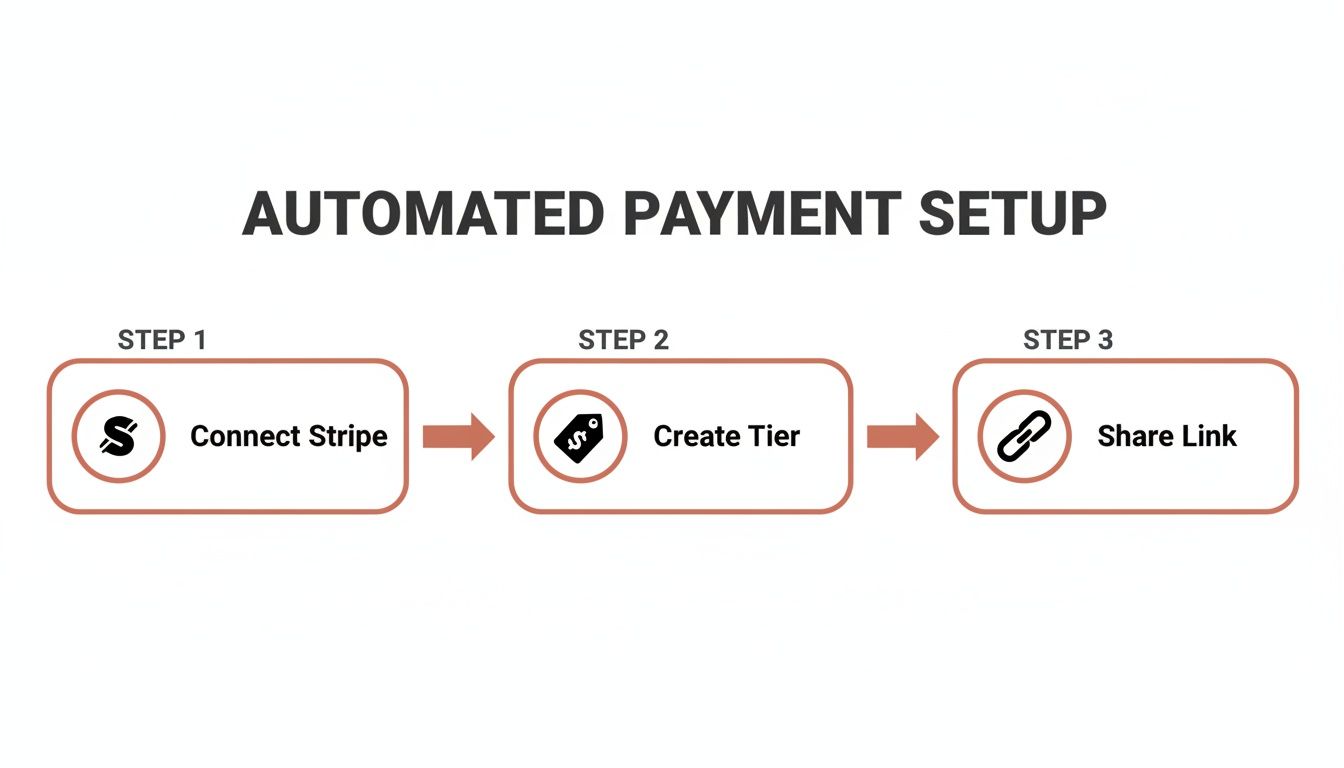
This kind of streamlined workflow is critical. The moment a student decides to buy, their journey into your community should be instant and seamless.
Leveraging Social Proof from Day One
Nothing helps you sell online courses better than social proof. When potential students see other people just like them succeeding with your methods, their objections and hesitations begin to melt away. From the very first member who joins, your focus should be on celebrating their progress.
Encourage your initial students to share their wins, no matter how small, right inside the community. You could create a dedicated #wins channel in your Discord server where members can post about their breakthroughs. These authentic, user-generated testimonials are far more powerful than any sales copy you could ever write.
Don't wait for perfect, polished testimonials. Capture the excitement as it happens. A screenshot of a happy comment in your Discord can be one of your most effective marketing assets.
This strategy is especially powerful in engaged learning environments. Take the online education market in France, for example. Valued at around $730.9 million in 2023, it boasts a remarkable course completion rate of 88%. This high level of engagement shows that when students feel supported and connected, they are far more likely to get results—creating a positive feedback loop of success stories you can use to attract new members. You can discover more insights about the French e-learning market to see the data for yourself.
By focusing on value-driven content before the launch and amplifying your students' successes after, you create an authentic and powerful marketing engine. This approach builds trust, generates excitement, and makes the entire process feel natural and rewarding, not pushy.
FAQ: Selling Courses on Discord
Got questions? You’re not alone. Switching to a community-first model for your course can feel like a big leap, especially if you’re used to the old-school platforms. Let’s tackle some of the most common things that come up when creators decide to sell with Discord and Join My Thread.
My goal here is to clear up the confusion and show you how powerful this setup really is — for you and your students.
"Is Discord Really Professional Enough for a Paid Course?"
Absolutely, and this is a big one. It's easy to think of Discord as just a gaming chat app, but many six and even seven-figure course businesses are built entirely on it. Why? Because its real power is in fostering a genuine community. That connection is what keeps students engaged and gets them results.
You just have to be intentional. With well-structured channels, clear roles for members, and a solid set of guidelines, you're not running a chaotic group chat; you're building an exclusive digital campus. It’s all about how you frame it. A thoughtfully organised server feels premium, supportive, and incredibly valuable.
"What if My Audience Isn’t on Discord?"
This is a totally fair question. The good news is, it's an easy fix. Your secret weapon is a dead-simple onboarding process. Your job is to make their first five minutes on the platform a breeze.
Create a #start-here channel that every new member lands in. Inside, you can pin a few key things:
- A quick, friendly welcome video showing them around the server.
- A simple screenshot guide on how to mute channels they don’t need.
- Clear instructions on where to ask questions and introduce themselves.
Honestly, most people pick it up in no time. And once they do, the real-time interaction becomes a huge plus, making your course feel alive compared to those static, lonely video platforms.
"How Do I Handle Cancellations and Refunds?"
This is where you'll really appreciate the automation from Join My Thread and Stripe. It’s designed to take all the administrative headaches off your plate by linking access directly to payment status.
When a student decides to cancel, they just manage their subscription through their Stripe customer portal. Once it's cancelled, the Join My Thread bot automatically removes their special role in your Discord server at the end of their billing cycle. You don’t have to lift a finger.
Refunds are just as clean. You handle those right from your Stripe dashboard. A few clicks to issue a full or partial refund, and poof—their access in Discord is revoked instantly. This keeps your community exclusive to paying members without any awkward manual work.
This automated workflow means you never get bogged down by admin. It frees you up to focus on what you actually love doing: teaching your students and building an amazing community.
This clean process protects your revenue and keeps everything feeling professional, making the whole operation to sell online courses feel smooth and manageable.
Ready to stop chasing payments and start building your community? With Join My Thread, you can launch your paid Discord or WhatsApp group in minutes. Set up your payment page, connect Stripe, and let our automation handle the rest. Start monetising your community today.